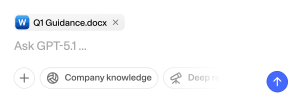
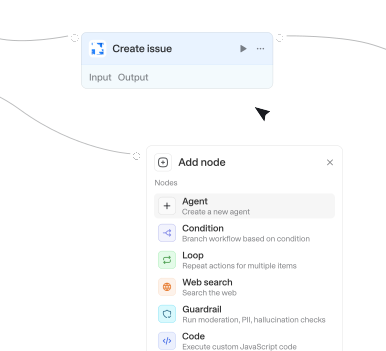
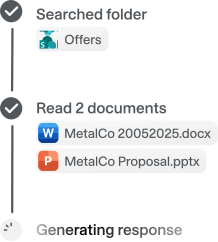
Wähle aus 56 verfügbaren Integrationen und 716 nativen Actions, um deine Agenten und Workflows zu erweitern.




Get event
Retrieves a specific event by its ID. Supports shared/delegated calendars: pass a colleague's email in 'Shared calendar owner' to act on their calendar (they must have granted you edit rights); leave it empty for your own calendar.

Get event invitees
Gets the invitees (attendees) of a scheduled event with their name, email, and responses.
Get events for specific date
Retrieves all calendar events for a specific date. Times are automatically displayed in the user's configured timezone. Use this for events on a specific single date like 'what do I have on Friday?' or 'meetings on March 15th'.


Get fields
Returns all Jira fields with schema metadata. Use this to find field IDs (e.g., customfield_12345) and understand their types.
Get file
Gets / downloads a file from Sharepoint based on the item ID and attaches it to the chat, use this action to get the contents of a file.

Get file content
Retrieves the actual content of a file from a repository. Use get_repository_content first to find the file path, then use this action to read its contents.


Get file metadata
Retrieves detailed metadata for a file by its ID including name, type, size, dates, and owner information.

Get folder by name
Retrieves a folder from OneDrive by its name or path. Supports nested paths like "Parent/Child/Grandchild".


Get free/busy for calendar
Retrieves free/busy information for one or more calendars over a specified time range using the Google Calendar API /freeBusy endpoint.


Get goal
Gets detailed goal data including due dates and owner. Requires a goal GID from get_goals. Returns full goal details
Get goals
Lists goals in a workspace, optionally filtered by team, project, portfolio, or owner. Requires a workspace GID from list_workspaces. Returns goal GIDs, names, and owners

Get HubSpot owners
Retrieves all HubSpot owners/users with optional filtering by email. Returns owner IDs that can be used in hubspot_owner_id fields when creating or updating contacts, companies, deals, and notes.

Get incident metadata
Gets field definitions for the incident table, including labels, data types, required flags, and allowed values for choice fields. Use this action to discover which fields are mandatory in your ServiceNow instance before creating or updating incidents. Set onlyRequired=true to get only mandatory fields. Custom fields and their requirements vary by instance.

Get index configuration
Returns field configuration for your Kendra index. Shows field names, types (STRING, DATE, LONG), and properties (searchable, sortable, facetable). Run this BEFORE searching to know which fields you can use for filtering and sorting.

Get integration
Retrieves details of a specific integration including its actions, triggers, and auth configuration




Get item by name
Searches for Excel files by name or resolves a direct URL. Returns file ID, driveId, name, URL, and metadata for use with other Excel actions.

Get items
Gets items from a Monday board. By default, fetches all items on the board. If not specified, get the limit for the board from the get_boards action output, use itemIds to look up specific items by ID across boards, or searchQuery to find items by exact name. Returns an array of items with their ID, name, and column values.
Get item updates
Retrieves the comment thread on a specific item. Requires an item ID. Returns a list of updates with author, text content, and timestamp.
Get knowledge article
Retrieves the full content of a specific knowledge article by sys_id. Returns the complete article body (HTML in the 'text' field), metadata, and optionally attachments. Use find_knowledge_articles first to search and get the sys_id.
Get knowledge bases
Lists available ServiceNow knowledge bases. Each knowledge base is a collection of articles organized by topic (e.g., IT Support, HR Policies, Facilities). Returns titles, descriptions, and sys_ids that can be used to scope searches in find_knowledge_articles.
Get knowledge file
Retrieves details of a specific file in a knowledge folder including its processing status and summary. Requires KNOWLEDGE_FOLDER_API scope.


Get manager
Returns the direct manager of a user by their ID or user principal name. Returns the manager's full profile, or indicates no manager is set.
Get marketing email
Gets the full details of a HubSpot Marketing Email including its content widget structure. Requires a marketing email ID (use 'List marketing emails' to find one). Returns the email's name, subject, state, full content object, sender details, and timestamps.

Get market insights indicator
Retrieves the data for a specific Statista Market Insights indicator using its unique identifier, optionally scoped to up to five geographies. Designed to work with results from the 'search_market_insights' tool - pass an indicator ID and, optionally, geo codes from that indicator's covered geographies. Always cite the source of the data in your response.
Get meeting
Retrieves a single HubSpot meeting by ID. Requires a meeting ID, obtainable from the Find meeting action. Returns the meeting title, description, internal notes, start/end times, location, outcome, owner, attendees, and external meeting URL.


Get meeting summary
Gets the AI-generated summary of a past meeting (requires meeting summary to be enabled)

Get meeting transcript
Retrieves the transcript for a Microsoft Teams meeting using the join URL, meetingRecap URL, or conference ID. By default, returns transcript text in the transcripts array. Set 'Return as file' to true only when you need downloadable VTT file output.

Get metadata
Retrieve all available dimensions and metrics for the property, including custom dimensions and metrics.


Get org unit
Retrieves an organizational unit (team or department) by ID. Get org unit IDs from list_employments or get_employment responses.

Get page
Retrieve the full content and metadata of a page by ID. Returns XHTML by default; pass directly to update_page. Set removeHTMLTags=true for plain text output.
Get page
Read a SharePoint page and return its content, metadata, and layout. Only works with modern SharePoint pages.


Get page blocks
Retrieves the block structure of a Notion page or block, including block IDs, types, and text content. Requires a page or block ID. Returns a list of blocks with their types, content, and nested children up to the specified depth.
Get page content
Retrieves the full content of a Notion page or block, including all nested child blocks, and converts it to Markdown. Requires a page or block ID. Returns the page content as a Markdown string.
Get page details
Retrieves the metadata and properties of a specific Notion page. Requires a page ID or URL. Returns the page's properties, parent, icon, cover, and timestamps.
Get pages
List pages using structured filters such as space, status, sort order, or specific page IDs. Best for browsing or listing pages rather than matching by text.
Get parent goals for goal
Lists all parent goals for a specific goal. Requires a goal GID from get_goals. Returns parent goal GIDs and names
Changes in path
Triggers when files are added or modified in a specific path. Useful for CI/CD pipelines, config monitoring, code review automation, or content tracking.

File updated
Triggers when a file is updated in a SharePoint folder. Re-fires each time a file's contents change, and optionally filter by name or file extension.

Label changed on email
Triggers when categories are added to or removed from an email in your Outlook mailbox.
New email in shared inbox
Triggers when new emails are received in specified shared inboxes (users you have Mail.Read.Shared access to).
New email in shared mailbox folder
Triggers when emails appear in a specific folder of a shared mailbox (either newly received or moved to it). Requires Mail.Read.Shared permission and folder access.
New email in specific folder
Triggers when emails appear in a specific folder (either newly received or moved to it).
New email matching search
Triggers when new emails matching your search query are received (sent emails excluded unless you add 'in:sent').
New event matching search
Triggers when new calendar events matching the specified search query are created.
New event matching search
Triggers when new calendar events matching the specified search query are created.
New issue
Triggers when a new issue is created in the repository. Does not trigger for pull requests.
New item created
Triggers when a new file or folder is created in a SharePoint folder. Watch files, folders, or both, and optionally filter by name or file extension.
New meeting transcript
Triggers when a transcript becomes available for a recently ended Teams meeting.

New message by search
Triggers when a new message is found by searching for a specific keyword or other criteria.
New message in channel
Triggers when a new message was posted in a channel (public, private, DM, etc.).
New message in conversations
Triggers when a new message is posted in a specific conversation (DM, group DM, or channel).

Property changed
Triggers when a property on a HubSpot object (a standard object like a contact, company, deal, or ticket, or a custom object) changes. Watching a specific property fires once per value transition and returns the new value under a key named new_ followed by the property name (e.g. new_dealstage when watching dealstage). Leave the property name empty to fire on any update to the object instead.
Actions
Triggers
Actions
Triggers
Actions
Triggers
Actions
Triggers
Actions
Triggers
Actions
Triggers
Actions
Triggers
Actions
Triggers
Actions
Triggers
Actions
Triggers
Actions
Triggers
Actions
Triggers
Actions
Triggers
Actions
Triggers
Actions
Triggers
Actions
Triggers
Actions
Triggers
Actions
Triggers
Actions
Triggers
Actions
Triggers
Actions
Triggers
Actions
Triggers
Actions
Triggers
Actions
Triggers
Actions
Triggers
Actions
Triggers
Actions
Triggers
Actions
Triggers
Actions
Triggers
Actions
Triggers
Actions
Triggers
Actions
Triggers
Actions
Triggers
Actions
Triggers
Actions
Triggers
Actions
Triggers
Actions
Triggers
Actions
Triggers
Actions
Triggers
Actions
Triggers
Actions
Triggers
Actions
Triggers
Actions
Triggers
Actions
Triggers
Actions
Triggers
Actions
Triggers
Actions
Triggers
Actions
Triggers
Actions
Triggers
Actions
Triggers
Actions
Triggers
Actions
Triggers
Actions
Triggers
Actions
Triggers
Actions
Triggers
Actions
Triggers
Actions
Triggers
Actions
Triggers
Actions
Triggers
Actions
Triggers
Actions
Triggers
Actions
Triggers
Actions
Triggers
Actions
Triggers
Actions
Triggers
Fragen & Antworten
Was kann ich mit Langdock‑Integrationen machen?
Integrationen verbinden Langdock mit deinen bestehenden Tools, sodass Agents und Workflows interne Dokumente durchsuchen, Aktionen auslösen, Daten aktualisieren oder Abläufe in deinen Apps automatisieren können.
Welche Tools kann ich mit Langdock integrieren?
Langdock unterstützt eine große Bandbreite gängier Business‑Tools wie Google Drive, Notion, Confluence, Slack, Salesforce, Jira, Asana und viele mehr. Du kannst zudem individuelle Integrationen für jedes Tool erstellen, das eine API anbietet.
Muss ich eigene Integrationen entwickeln?
Das ist nicht notwendig. Die meisten Verbindungen funktionieren sofort nach der Aktivierung. Wenn du jedoch erweiterte Funktionen oder Actions benötigst, bietet Langdock einen integrierten Builder an. Damit erstellst du deine eigene Logik – inklusive unterstütztem JavaScript-Flow.
Sind Integrationen sicher?
Absolut. Langdock nutzt eine sichere Authentifizierung (inklusive OAuth 2.0), verwahrt Zugangsdaten geschützt und führt eigenes Code‑Handling in einer isolierten Sandbox‑Umgebung aus. Zusätzlich ist Langdock ISO 27001‑zertifiziert, SOC 2 Type II-geprüft und vollständig DSGVO‑konform.
Wie nutze ich Integrationen in einem Chat oder Agenten?
Sobald eine Integration verbunden ist, kannst du sie in jedem Chat direkt nutzen, indem du @ eingibst und verfügbare Actions auswählst. Außerdem können Agenten dank ihrer Anweisungen Integrationen automatisch ausführen.